Skygrazer

Polymer clay addict and artist. Also fascinated by kaleidoscopes.

Velvety Rabbit – Painting

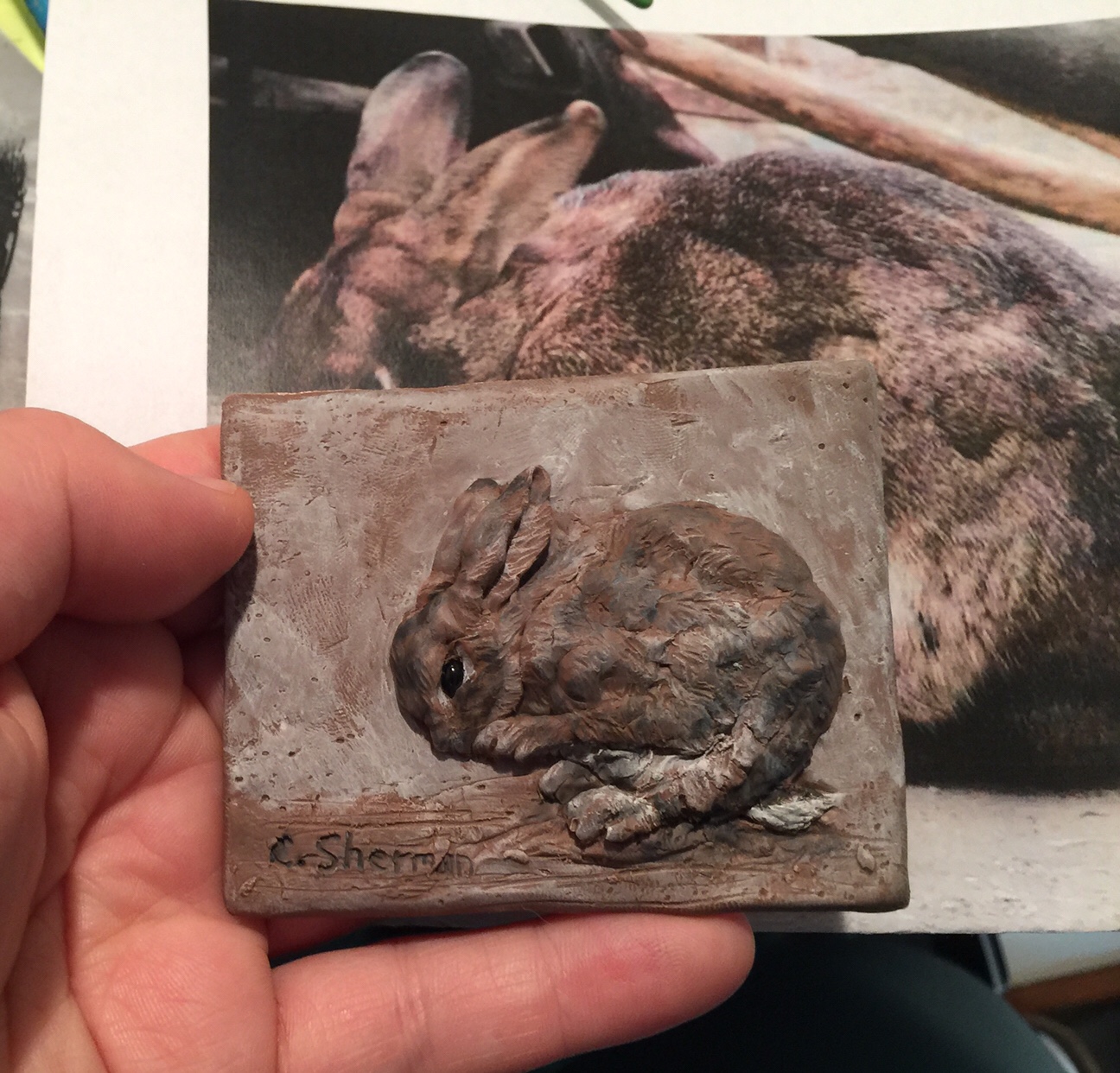
Here’s the finished rabbit miniature (approximately 2.5×3″) and how I painted it.

I used cream and black acrylic – the black was softened with some of the cream color.


First I came in with a fairly dry brush and lightened up the background so the rabbit would stand out more.

Then I drybrushed the areas of the rabbits fur that I wanted to highlight or whiten, and added some lighter fur around the eye.


I used a slightly lightened wash of black (but not too much on the brush at one time) to darken areas of the fur and shadows.

I used a thin wash to highlight my signature, then wiped the excess paint off the surface.

Here it is done… But not yet framed.

Posted by Skygrazer in animals and nature, art, polymer clay, tips and tricks, 0 comments

Velvety Rabbit – Work in Progress

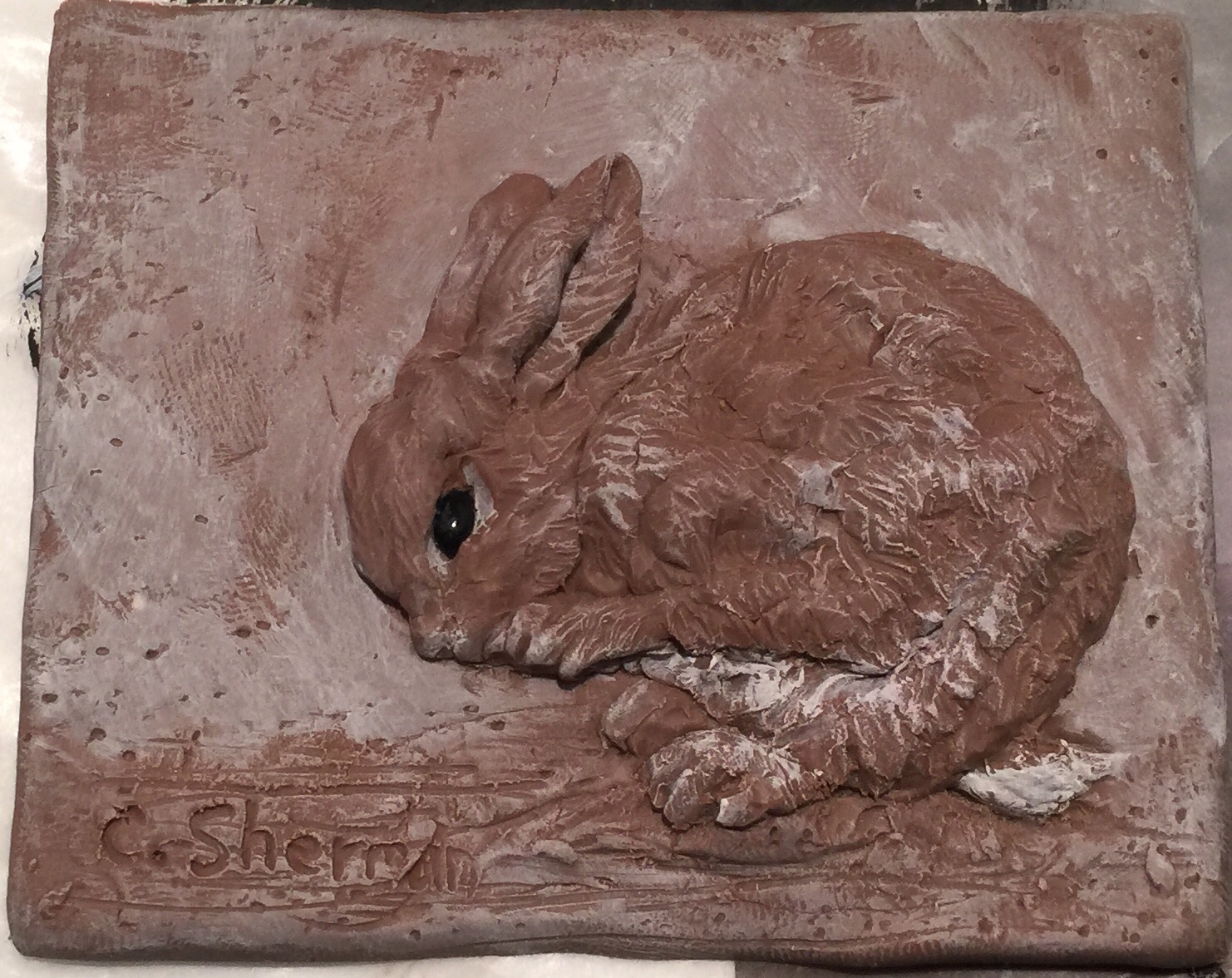
Marie sent me a block of taupe Cernit, which is this lovely soft brown with an almost purple undertone. It reminded me of a rabbit photo I’d taken a few years ago that I’ve wanted to sculpt.

Cernit conditioning tip – warm your clay before you run it through the pasta machine. (Sit on it or tuck it in your pocket.)

The studio was rather chilly, and the clay started to shred the first time I ran it through. I gathered it up, compressed it in my hands for a minute and within 3 passes it was smooth and conditioned like you see here.

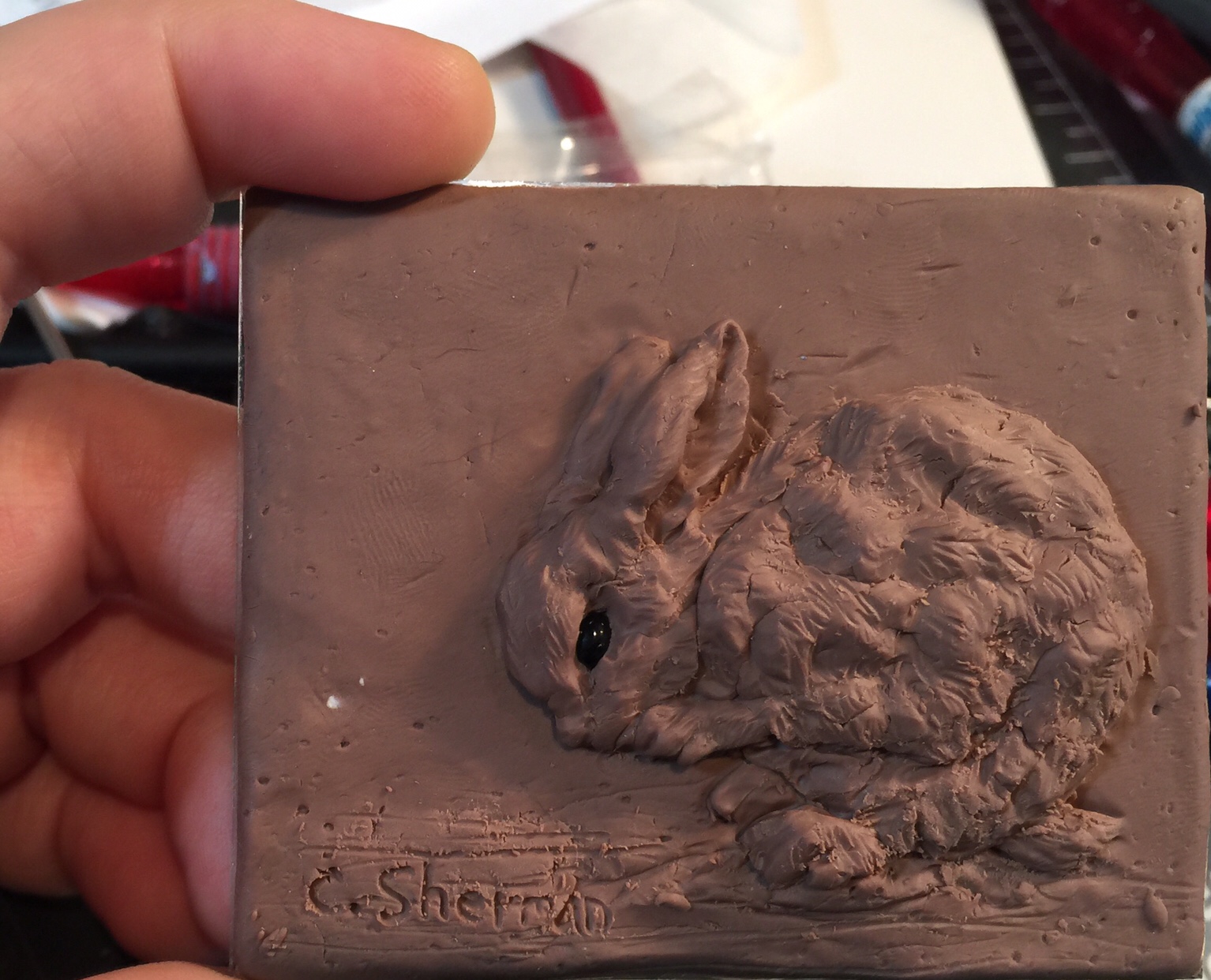
This is how it starts out… I outline the form, then put down an eye – in this case a black glass bead. Then I start building up clay, adding and smoothing and shaping it with tiny tools.

Here it is about half way done.

I’ll show the finished rabbit and a bit of the painting process in the next post.

Posted by Skygrazer in animals and nature, art, polymer clay, tips and tricks, 0 comments

Dream Big

Here’s my little stubby cuttlefish (or cuddlefish?) all colored in. He’s dreaming of his future plans, or maybe watching his ancient relative the Kraken up above.

This is Pan Pastel* and Prismacolor pencil* on Cernit clayafter it was baked.

In the last post, I showed you what it looked like with a wash of brown acrylic paint.

And I think I finally found a good tool for applying pan pastel to 3d surfaces! I bought a big set of makeup brushes (I got them on Geek from China since I didn’t want to pay big bucks if it didn’t work out). They’re designed for carrying powder without making a mess and they worked so much better than ordinary paint brushes. I’ll have to try them on raw clay next time.

Some of the details on the ship were added with the colored pencils, but the rest of the color came from the Pan Pastels. I’m really amazed at how well the pastel sticks to baked clay.

I didn’t like the first color I did on the background and tried to wipe, then rinse it off, and it barely budged. I finally gave it a light sanding to remove some of the color. I did give it a coat of Golden Acrylic UVLS Matte Varnish* to protect it anyway when it was all done. Just wipe or clean your brush often when you’re trying to seal pastels.

So, from the Cernit experiment side, the clay takes color and paint as well as Premo. I haven’t noticed any differences on that end. The colored pencils worked really nicely on it too.

Cernit is stiffer once it’s baked than Premo. It still has a slight flex to it so it’s not brittle – I’ve read it’s quite strong and it seems like it even though I haven’t done any destructive testing yet. The fact that it doesn’t flex as much will be good for me when I’m making reliefs. I always have to glue Premo to some kind of backing but I might be able to get away without that for smaller pieces with Cernit.

*Note – Amazon affiliate links. I get a small percentage if you buy something from Amazon through that link. The link to Cernit is to Marie’s http://www.clayfactory.net site. I’m not an affiliate but she supplied the Cernit clay for me to try.

Posted by Skygrazer in art, pastel, polymer clay, tips and tricks, 2 comments

Cernit White – Dream Big

So I wanted to try the white Cernit in a simple sculpture.

I actually tried the white Doll clay first, but that seems to have a higher smudgability factor (often a good thing) and I kept fusing the tentacles together on the first version I did. I also realized just how translucent it was when the first baked sample came out of the oven and I wanted something a little more opaque as a base for my Pan Pastels. I do want to play with the Doll clay further though because I like the feel of it. With a lighter touch, a bit of leaching or mixing it with the regular White, I think it will work well.

So.. I rolled out a sheet of clay as the background and sculpted my little guy. He’s actually based on this video I saw of a cute little purple creature commonly known as the stubby squid. (Even though he’s not a squid.)

I really like the Cernit so far. It does get softer as you work it, so you have to take that into account but it worked well.


And this is what it looked like baked and with a brown acrylic wash to bring out the details.

Color coming soon 🙂

Posted by Skygrazer in animals and nature, art, polymer clay, 0 comments

White clay comparison – Cernit

Full Disclosure – Marie Segal sent me some Cernit clay to try after I’d talked to her about sculpting during her workshop. Free clay! Thanks so much Marie!! But there were no strings attached. She just wanted to know how I like sculpting with it.

Since I tend to paint my work afterwards, I usually sculpt in a neutral color like white or black. My previous batch of Premo white had been rather annoying – not conditioning well and not staying pliable. So I started off with the whites.

So… Here’s me being all scientific and testing out the Cernit White vs Cernit Doll White vs some very fresh Premo White that I had ordered in the meantime.  I used a one inch mold from an oak tree sculpt I had done to see what each of them looks like.

The Cernit package says to bake it at 265 degrees F but I put them all in at the Premo temperature of 275 and it seemed to have no problem with it.

Unbaked. Premo – Cernit White – Cernit Doll White

Baked. Premo – Cernit White – Cernit Doll White

Premo White – my old standard sculpting clay. The fresh winter clay was soft and pliable. Took a good impression from the mold. (Hasn’t been consistently reliable lately though and I’m not sure if it’s the season or the age of the clay that makes the difference.)

Cernit White – Has a slightly firmer feel to it. Conditioned well and took an even nicer crisper impression from the mold. Since I do mold a lot of my designs for pendants especially, I’ll be playing more with this. Easy to fold and seams merged well.

Cernit Doll White – Soft and very pliable – has an elasticity to the clay that was fun to play with. Very translucent once baked – compare the colors in the samples above. Probably wouldn’t be my go to clay for molding though since it stretched slightly when I pulled it from the mold, although I probably could have gotten around that by letting it sit first or putting it in the freezer. I’ll be interested in trying some stretching and manipulation with this clay. I think it would do well for something like Mobius beads or octopus tentacles  😉

Stay tuned as I try sculpting with it…

Posted by Skygrazer in polymer clay, 4 comments
Marie Segal Workshop – Intro to Cernit

Marie Segal Workshop – Intro to Cernit

Back in September I took a workshop with Marie Segal. It’s amazing how time flys, isn’t it?

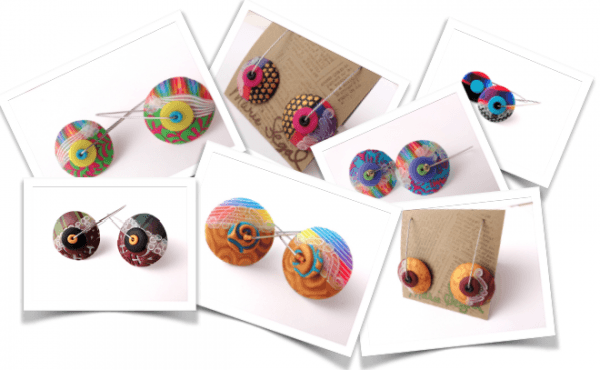
The first day was on translucent caning techniques and the second day was on making her gorgeous signature disk earrings with handmade integrated earwires.

One of the things I love about taking workshops is that I often learn something that wasn’t even part of the main technique, or I get inspired by a new idea and take my own work in a new direction.

The most valuable thing I learned this time was on clay handling in general and the changes that have happened in recent years with the formulas after they removed the pthalates.

Marie mentioned that the current plasticizers are safer, but more prone to evaporating. Something I’ve noticed for myself without really understanding why.

I’ve used Premo as my clay of choice for years, and it used to be that I could leave a sculpture for months and come back to it and the clay would be still be pliable and workable. I’m not finding that anymore.

You may have heard the clay has a “shelf life” now. If I leave a relief sculpture for a week, I’ll come back, try to adjust a section and the clay will just break off instead of moving where I want it. Really not good when you have tiny sculptural details.

Marie only takes out the clay she’s going to use, and tightly wraps up the remaining block. I’ve been doing that with my reliefs as well if I leave them for a few days, and it seems to be helping.

She also mentioned that there can be seasonal changes between batches – the different companies tend to make the clay softer in the winter and firmer in the summer – and says to adjust what you get to suit your own preferences.

Leach the clay if it’s too soft or add softener (Cernit Soft Mix, Diluent) or a different softer batch of clay if it’s too firm. Make that clay work for YOU 🙂
The other thing that was new to me was working with Cernit. I’d heard of it before – the doll makers love it – but had never used it myself.

Marie supplied the clay for the class and we got a chance to try it out. It’s much more translucent than the other brands – even their opaque colors have a touch of translucency to them. It was great for the translucent canes we were making.

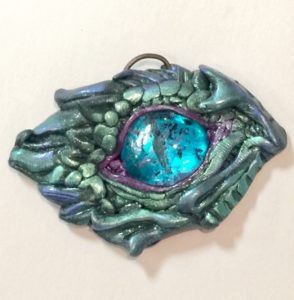
Since caning isn’t really my thing, the first thing I tried on break was a sculpted dragon’s eye. This was in Cernit Shiny Duck Green (gorgeous subtle mica shift color) with just a little pearlex on top. (Already sold during the class.)

The clay conditioned well, sticks to itself and blends well. I was really happy with it actually.

So more Cernit experiments coming soon!
Posted by Skygrazer in polymer clay, tips and tricks, 2 comments

Mica Magic Class – January 20th

I’ll be teaching a Mica Magic class at the Wickford Art Association in Wickford, RI. Saturday, January 20. 9 AM – Noon.

Sign up now.

If you’ve seen my iridescent dragons or jewelry, mica is what I use to make them that way. It’s a gorgous effect and we’ll cover a variety of techniques using it in this class on polymer clay.

We’ll explore texture, shape, and layering techniques to create a pendant. You’ll learn how to create your own shape templates or combine commercial cutters to further customize your designs.

We’ll use iridescent mica powders to take black clay from boring to FABULOUS, darling. 😉  You’ll learn how to apply mica without sending it all over the room, resist techniques, and how to protect it afterwards.

As long as you have time, you can make more than one pendant or try a coordinating set of earrings.

This is a great introduction to polymer clay, jewelry and mica powders. The same techniques can be used to incorporate polymer clay into mixed media and collage work as well, and mica powders can be combined with many other mediums for an iridescent shimmer.

I supply all the materials ($10 materials fee) but let me know if you’d rather get your own supplies so you can use them later. I can send you a supply list.

It will be a fun class and I hope to see you there. 🙂

Posted by Skygrazer in my news, polymer clay, 0 comments
Otter in Pastel

Otter in Pastel

Here’s my latest. On the left is the reference photo I took at the Buttonwoods zoo. I literally have hundreds of otter photos – they’re just so much fun to watch.

This time I used pan pastels for the initial color, then I continued with soft stick pastels. I used the Canson Mi-Tientes paper again (9×12″), this time in a bluish grey, but forgot to check and ended up using the rougher, textured side.

I don’t really like the waffle texture that you end up with from the rough side of the paper. I ended up doing more smoothing than I normally would have (smudging and blending the color into the recesses of the paper).

But I’m happy with how it turned out anyway.

I could keep working on it, but I captured the otter and I think it’s the right time to stop.

Posted by Skygrazer in animals and nature, art, pastel, 0 comments
Kestrel in Pastel

Kestrel in Pastel

My first real pastel painting outside of the one workshop I took. This was Sennelier* soft pastel on the smooth side of Canson Mi-Tientes paper* (white).

This was the first blockin of color.

Then I used some alcohol and a brush to form the pastels into a wash for the underpainting. I let that dry and built up the color with more dry pastel.

This is what I ended up with at the end.

* Amazon affiliate links to the products I used

Posted by Skygrazer in animals and nature, art, pastel, 0 comments
Pastel 101

Pastel 101

I took a pastel workshop in the summer – my first real attempt at any sort of painting. I loved it.

Pastels are layered color – powdery gems all over the paper (and my clothes and my nose). It reminds me quite a bit of the way I approach sculpting a relief. Building up color and depth instead of form and texture.

So… I loved it, but I was busy with classes and art shows through the summer and fall so I didn’t get a chance to dig into it until recently. I did read a couple books and watched a number of videos in the meantime.

The hardest part of starting out was deciding which pastels to get. They’re expensive, and I wanted good quality and a wide variety of colors for my first investment. (You notice that? I think they could be as addicting as clay)

I already have a set of 80 pan pastels * (Love them – both on paper and clay and I bought all of them after my initial set of 20), an inexpensive set of Dick Blicks (Nice set to start with. Good color but on the harder side.) and a set of Carb Othello pencils * (great for details like animal eyes). I finally decided on these Sennelier half sticks*. Aren’t they gorgeous? Luscious color in a box. 🙂

So first thing I did was grab a scrap piece of paper (ordinary shiny printer paper) and see what the colors actually looked like. I started with a really lovely deep blue. Then I grabbed a photo off the bookcase from our beluga encounter and started playing.

Not quite a finished painting… But on the right surface – with some more tooth to the paper – I think it could have become one. I really should have started with a real piece of pastel paper. Pastel paper ranges from about 400 grit sandpaper (really sandpaper) to thick textured paper similar to watercolor paper. You just can’t get much pastel to stick to printer paper.

Love the pastels and I think I’m really going to enjoy painting.

*Amazon affiliate links to what I actually bought

Posted by Skygrazer in animals and nature, art, my news, pastel, 2 comments